
Desi Ghee in Pakistan: Price, and How to Tell Pure From Blended
What desi ghee costs, how it is made, and the checks that separate pure ghee from a blend.
Desi ghee price varies more than most people expect, and the reason is what went into the tin.
Desi ghee carries the same trust problem as honey and a fraction of the explanation. Here is what it costs, how it is actually made, and what you can check yourself.
Desi ghee price bands
| Type | Typical range (per kg) | Notes |
|---|---|---|
| Traditional churned (bilona-style) | Rs 3,000 – 5,000 | Made from cultured cream, small batches |
| Commercial desi ghee | Rs 1,800 – 3,000 | Direct-cream method, larger scale |
| Blended / vegetable-fat mixes | Rs 700 – 1,500 | Often labelled "ghee" but partly banaspati |
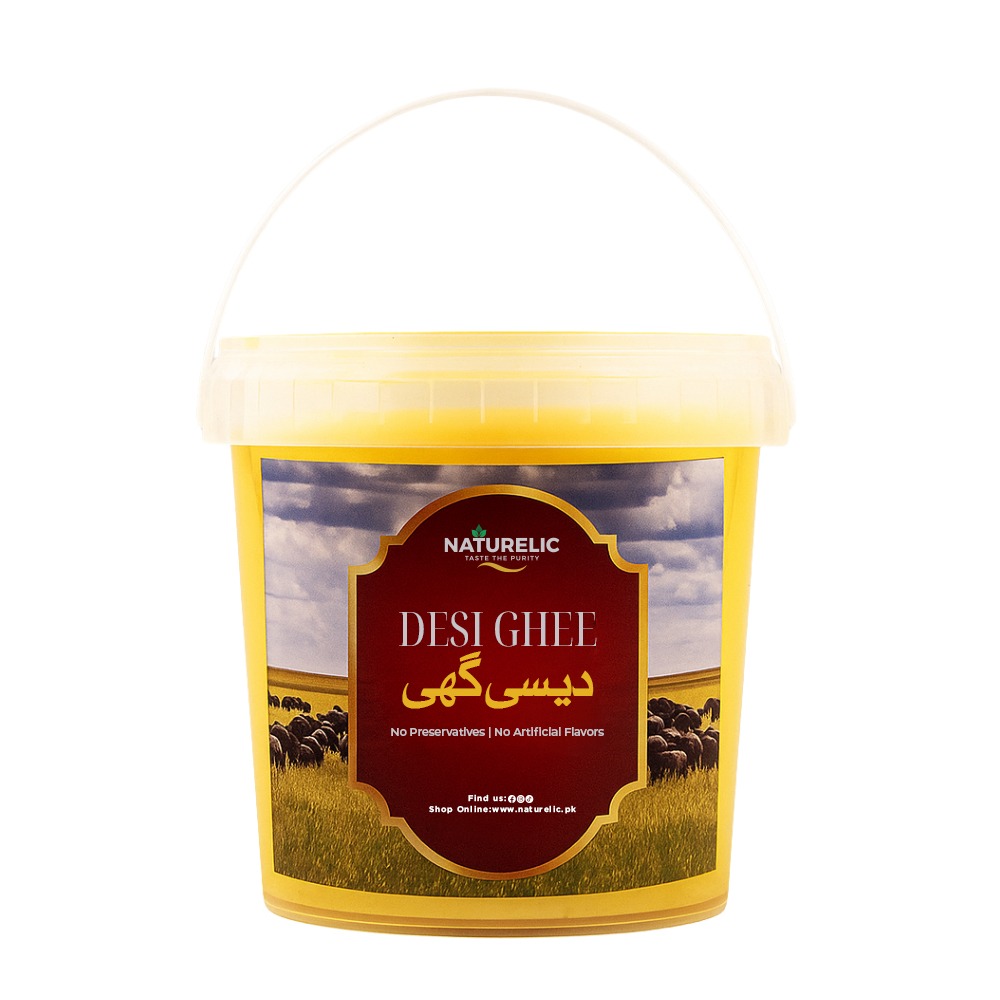
Our desi ghee is Rs 3,490.
How traditional ghee is made
Milk is set into yoghurt, the yoghurt is churned to butter, and the butter is simmered until the water leaves and the milk solids brown. The browning is where the nutty aroma comes from. It is slow and it yields less, which is the reason for the price.
The faster industrial route separates cream from milk and clarifies it directly. It is still ghee. It simply has less of the cultured character.
Ghee, banaspati and "blended ghee"
Banaspati is hydrogenated vegetable oil. It is a different product, and Pakistani labelling does not always make the distinction obvious. If a tub is priced near vegetable oil, read the ingredients rather than the front of the pack.
Checks you can do at home
- Melting. Pure ghee melts quickly in a warm pan and stays clear golden. Blends often turn cloudy or separate.
- Setting. In a Pakistani winter, pure ghee sets grainy and uneven. A tub that stays perfectly smooth and spreadable in December is usually blended.
- Smell. Traditional ghee smells nutty and caramelised, not neutral.
None of these is conclusive on its own. They are indications, not laboratory tests.
Storing it
Keep ghee sealed at room temperature and away from sunlight. It does not need refrigeration, and refrigerating it makes it hard to spoon. Always use a dry spoon — water is what spoils ghee, not time.
Smoke point
Ghee tolerates higher heat than butter because the milk solids and water are gone. That is why it suits frying and tarka where butter would burn.
See the desi ghee collection, or read about how we source everything else we sell.
Reading a ghee label
Pakistani labelling for fats is inconsistent, so read the ingredients rather than the name on the front. A tub labelled "ghee" may legitimately be desi ghee, or it may be a blend containing vegetable fat. Two things to look for:
- The ingredient list. Pure desi ghee has one ingredient: milk fat, butter or cream. Any vegetable oil, palm olein or hydrogenated fat means it is a blend.
- The price per kilogram. Dairy fat has a floor cost. A tub priced close to cooking oil cannot be pure ghee at any scale.
Why colour is not a reliable test
Ghee ranges from pale cream to deep gold depending on the animal's diet and how long the milk solids were browned. Buffalo ghee is typically paler than cow ghee. A deeper colour is not proof of quality, and some blends are coloured deliberately, so judge by aroma and setting behaviour instead.
How much to buy
Ghee keeps for months sealed at room temperature, so buying a larger tub is usually more economical per kilogram. The exception is a household that uses it rarely: a tub opened and dipped into with a wet spoon over a year will spoil long before an unopened one would.
Related reading
See the desi ghee collection, or read about how we source what we sell. Delivery timings by city are on the delivery areas page.
Common questions
Why is cheap ghee so much cheaper? Because it is usually not the same product. Blends and vanaspati cost a fraction of what churned ghee costs to make.
See the desi ghee collection.
Common questions
What is the price of pure desi ghee in Pakistan?
What is the difference between desi ghee and banaspati?
How can I tell if desi ghee is pure at home?
Does desi ghee need to be refrigerated?
Can you cook at high heat with desi ghee?
Shop the range
Standard
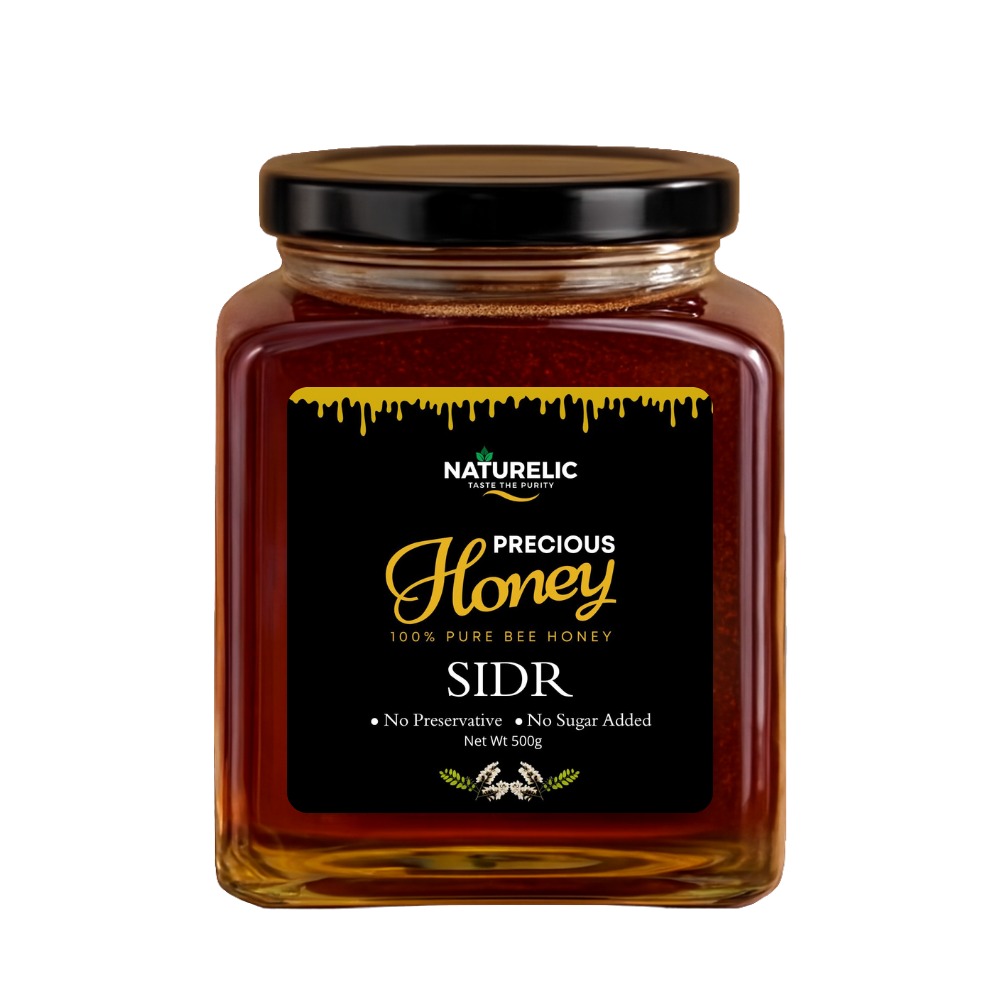
Sidr Honey
Rare mono-floral honey from the wild Sidr trees of Karak, Khyber Pakhtunkhwa. Dark, malty and slow to crystallise.
Standard
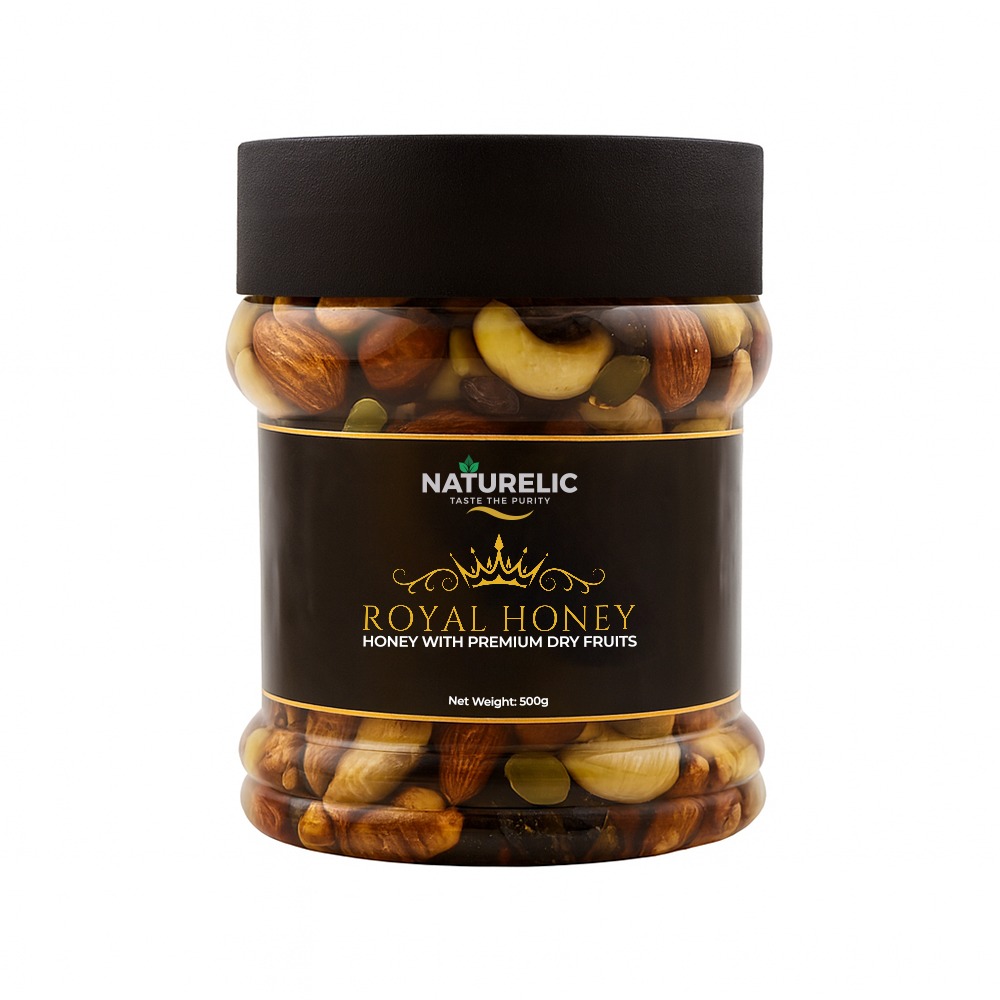
Royal Honey With Premium Dry Fruits
Raw honey layered with whole almonds, walnuts, pistachios and cashews in a single jar.
Standard
Desi Ghee
Traditionally churned desi ghee, slowly clarified in small batches for a nutty, caramelised aroma.
Keep reading
Why Honey Crystallises, and Why It Is a Good Sign
Your honey has gone solid. That is chemistry, not spoilage — and usually a good sign.
Ramadan and Eid Gift Guide: Honey, Ghee and Dry Fruit Hampers
Choosing a Ramadan or Eid gift that is actually used — by budget, with delivery timings.
Sidr vs Acacia (Palosa) vs Wildflower vs Robinia: Which Honey Should You Buy?
One table comparing every honey variety sold in Pakistan — taste, colour, setting behaviour and price.